Environmental Justice
The environmental justice movement recognizes the statistical fact that those who live, work and play in the most polluted areas of the US are usually people of color and the poor. Environmental justice advocates, primarily African-Americans, Latinos, Asians and Pacific Islanders, and Native Americans, have shown that these statistics do not reflect an accident, but rather that communities on the margins of society are routinely targeted to host facilities that have negative environmental impacts like landfills, and processing plants. Read on to learn how the health of the environment around us is critical to our own health, and to see some examples of environmental injustice.
Source: National Resource Defense Council
The One Health Theory
A century ago, nature was thought of either as a resource bank or an ethereal realm, detached from human affairs. Today, Western societies are starting to realize that the health of the environment and the life it contains is intimately linked with our own health as humans. This idea is referred to as the One Health Theory. One of the best ways to mitigate public health problems is sound environmental management. By taking care of the environment, we take care of ourselves. We discuss two cases here, one historic and one current. The Donoran Smog is often a footnote in history, but it drove significant developments in air quality management in the US. COVID-19, similarly, represents the emergence of a disturbing trend of zoonotic diseases spreading in human communities, caused by human activity erasing the border between wildlife and humans.
The Donoran Smog, 1948
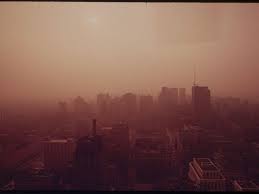
Industry produces pollution, such as this hazy skyline during the Donoran Smog (1948).
Few Americans today remember the Donoran Smog, especially in an age when American air quality is relatively clean in most parts of the country. America has not always had clean, breathable air, especially as the country grappled with industrial progress and environmental management. Donora was a borough in Pennsylvania that hosted two steel plants. On Oct 27, 1948, freak temperatures caused the pollution from the plant to be trapped around the town for five days. The smog induced a variety of respiratory diseases that killed 20 people within a week and 50 more within the month. This is one of the most memorable instances in American history in which a direct link between air pollution and health risk was noted, but it wasn’t an isolated event. The Donoran Smog, much like the London Haze in the 19th century, put pressure on legislators to eventually pass the Clean Air Act and to better regulate industrial pollutions. Today, certain environmental and health advocates worry that we may be forgetting the fatal lessons of the Donoran Smog, and taking our clean air for granted by loosening environmental regulations in industry.
Source: Smithsonian Magazine
COVID-19 and Future Pandemics

Deforestation results in habitat loss for wildlife, and increases contact between humans and animals
All across the world, but particularly in the Global South, massive swaths of forest are cut down daily to make room for industrial agriculture, mining and timber production. This deforestation destroys wildlife habitat, pushing animals closer to human settlements and increasing contact between wildlife and humans. This can lead to more disease in two ways – by killing more species that can dilute pathogens in area and by creating more places where humans and animals interact. Where there are higher levels of contact between humans and wildlife, there are higher levels of zoonotic disease (animal to human pathogen) among humans. Deforestation has been linked to outbreaks of Ebola, Nipah and Lassa virus, as well as diseases linked to parasites, such as Lyme disease and malaria. By some estimates, 75% of all transmittable diseases are zoonotic in nature. While the whole world may feel the effects of a zoonotic pathogen outbreak, the impacts are not equal and the most affected communities are those on the edge of the environmental destruction. The One Health Theory is vital to understanding both how to mitigate future pandemics, as well as to address how communities are disproportionately impacted. It will require a global effort, one that likely requires a drastic rethink of humanity’s relation with nature.
Source: NPR News
An Inequitable Environment
We may think of the air we breathe and the water we drink as universal equalizers, but for millions of people in the US, poor water and air quality have negative health impacts. Communities of color, indigenous communities, and rural communities are more likely to live in poorly managed environments compared to affluent white communities. Environmental factors contribute to health inequities, which have major downstream effects, including reduced life expectancies, increased healthcare spending, reduced productivity, and reduced long-term economic stability. Understanding and urgently addressing inequities in health outcomes caused by discriminatory policies is vital in the environmental justice movement. Below, we discuss two current cases that illustrate the problem of environmental racism in this country.
Access to Clean Drinking Water

Water violations and overlap with communities of colour, 2015
The above map from a study by the Natural Resources Defense Council (NRDC) shows the overlap between water regulation violations and where communities of colour are located. The darker the colours, the greater the correlation between the two. The data shows that huge portions of communities of colour in the south and southwest, as well as some counties along the coast, are dangerously underserved. In addition, poor rural areas such as the deep south and the Appalachians also suffer from deteriorating water quality. The report also points out that hazardous waste that contaminates water is often stored in communities of colour and low-income areas, making such water violations and lack of oversight even more dangerous. In addition, response time to these violations also lags far behind in communities of colour, particularly in the Southwest region. These issues demonstrate that many of the promises to improve the environment made during the 20th century have not been realized for every American. Nearly 50 years after the passage of the Clean Water Act, many poor, POC communities in the US continue to have poor drinking water quality.
Nuclear Waste Storage
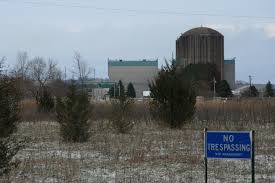
Prairie Island Nuclear Plant in Red Wing, MN on Mdewakanton band of Dakota land.
When we talk about nuclear power, we often jump to questions about its safety: how do we prevent leaks, and how do we treat nuclear waste? Left out of this conversation is the location of these plants and which populations are most impacted by them. In the United States, more often than not, the answer is on Tribal-owned lands. Native American tribal communities have been either coerced or bribed into being storage for nuclear plants and nuclear waste, because they are not subject to the same state regulations as other locations. Long term radiation sickness as a result of both nuclear waste and Uranium mining have plagued native communities across the United States. On the Prairie Island reservation in Minnesota, the Mdewakanton band of the Dakota have been forced to cede land that was flooded as a result of powering the plant, and are also exposed to potential nuclear risks far higher than non-native communities. This is not a discussion on the risks of nuclear power, but rather who is most vulnerable and most likely to face these risks.
Source: MPR news
Key Organizations
Environmental Protection Agency Office of Environmental Justice

The Environmental Protection Agency (EPA) has an established Environmental Justice division that offers financial support for organizations working towards environmental equity and justice. The office was established in 1992 and has been supporting various initiatives to address inequities ever since. It is not always easy to get funding, depending on the attitude of the presidential administration. But the accumulation of the EPA EJ’s works have been slowly but surely promoting the growth of environmental justice as a movement and a cause.
Minnesota Pollution Control Agency Environmental Justice Advisory Group

The Minnesota Pollution Control Agency is advised by a group of community members who have lived experience and expertise regarding issues of environmental justice, so that they are able to advise the agency in their permitting decisions process. This group researches issues, conducts outreach to impacted communities and makes recommendations to the head of the agency. For an overview of areas of environmental concern, see this interactive map.
